How to Choose Quality Womens Clothing from China?

Time:2026-10-21 Author:Aria
0%

Choosing clothing from China can offer strong value, but quality varies between factories, workshops, and trading companies. This guide explains how to choose quality women's clothing with greater confidence and fewer costly surprises. Experience matters here. A polished product photo cannot reveal loose threads, thin lining, or uneven stitching.

Begin with the fabric, construction, and supplier’s production history. Request a physical sample before placing a larger order. Feel the fabric, check its recovery after stretching, and inspect seams under bright light. Measure the garment against the approved size chart. A difference of two centimeters can change the fit noticeably. Ask for fabric composition, weight, colorfastness information, and care instructions. These details should match the final product, not only the supplier’s promises.

Look for transparent communication and consistent documentation. Reliable suppliers can explain their inspection process, production capacity, packaging, and handling of defects. Confirm that labels and materials meet the requirements of your target market. Independent inspections can provide useful evidence before shipment. Still, no checklist removes every risk. I once underestimated how much a zipper finish affected the garment’s overall appearance. That small detail mattered more than expected. Leave room for honest review, especially after receiving samples. Compare several suppliers, record every specification, and avoid choosing solely by the lowest price. Quality is built through clear standards, careful sampling, and evidence that the factory can repeat the same result.
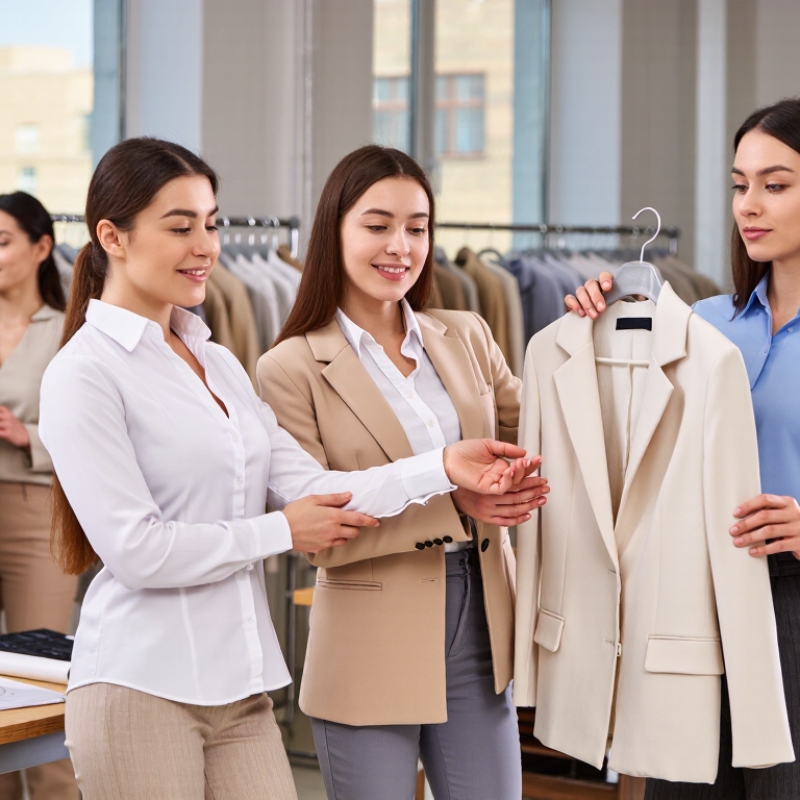
How to Choose Quality Womens Clothing from China?

Define Your Womenswear Needs and Quality Standards

How to Choose Quality Womens Clothing from China?

Before contacting a supplier, define the exact purpose of each womenswear item. A relaxed linen shirt needs different standards from a fitted work jacket. Write down the target customer, season, size range, fabric composition, color palette, and expected retail price. Include practical details, such as pocket depth, button strength, seam allowance, and acceptable shrinkage. Vague requests create vague samples.

Set measurable quality standards before comparing quotations. Request fabric weight, fiber content, colorfastness results, and a clear measurement chart. For knitwear, check stretch recovery after repeated wear. For woven garments, inspect seam strength and surface defects under bright light. Ask for a pre-production sample in the final fabric and color. A sample made with substitute materials proves very little.

I once approved a soft sample without testing its fit after washing. That decision caused avoidable alterations later. Quality checks should include washing, pressing, pulling, and wearing the garment. Measure key points again after these tests. Inspect hems, zippers, lining, and label placement. Independent inspection can improve reliability, but it cannot replace a precise specification. Leave room for honest review. A perfect checklist may still overlook comfort, movement, or how fabric feels against skin. Talk with the supplier about these details, and record every agreed change in writing.

Research Reliable Chinese Clothing Manufacturers and Suppliers

Choosing quality women’s clothing from China starts with researching the manufacturer, not chasing the lowest quotation. Look for a supplier with clear factory details, consistent communication, and experience producing similar garments. Ask for production photos, fabric specifications, size charts, and recent sample records. A reliable supplier should explain stitching methods, fabric composition, shrinkage, colorfastness, minimum order quantities, and delivery schedules in practical terms.

Samples reveal more. Request a pre-production sample in the exact fabric, color, and measurements required. Check the shoulder seams, zipper movement, lining, hems, and button attachment by hand. Ask whether the factory performs in-line inspections and final quality checks. Independent inspection can also verify measurements, labeling, carton quantities, and visible defects before shipment. A polished sample is not proof of stable production, so request references or evidence from comparable orders when possible.

My own early mistake was trusting fast replies too much. Quick communication helps, but it does not replace documented processes. Arrange a video call with the production team and ask specific questions about capacity, subcontracting, and corrective actions. Keep quotations, approved samples, payment terms, and delivery conditions in writing. Do not rush. Some suppliers may offer impressive promises but avoid detailed answers. That hesitation deserves attention. A dependable Chinese clothing manufacturer earns trust through traceable information, repeatable workmanship, and honest discussion when something goes wrong.

Evaluate Fabric, Construction, Sizing, and Product Measurements

When choosing women’s clothing from China, begin with the fabric, not the photograph. Textile Exchange’s Materials Market Report 2024 records global fiber production at 124 million tonnes in 2023. Polyester represented about 57 percent, while cotton remained a major natural fiber. Ask for fiber percentages, fabric weight, and finishing details. A dense cotton shirt should feel stable, not papery. Hold it toward light and inspect uneven weaving. Check recovery by stretching a waistband gently. It should return without rippling.

Construction reveals factory discipline. Examine shoulder seams, sleeve joins, hems, and pocket corners. Stitching should look even, with secure thread ends and balanced tension. Ask for seam allowances and wash-test results. ISO 6330 provides standardized domestic washing procedures, while ASTM D3776 helps measure fabric mass. These references make supplier claims easier to compare. Still, a laboratory swatch cannot represent every production batch. I have learned that small color and shrinkage differences deserve attention.

Sizing requires more than choosing small, medium, or large. Request a complete product measurement chart, including bust, waist, hip, shoulder, sleeve, inseam, and garment length. Measure a similar garment lying flat, then compare each point. Include tolerance ranges, such as ±1 centimeter, because cutting is never perfectly exact. The National Retail Federation reported $743 billion in U.S. retail returns during 2023, equal to 14.5 percent of sales. Poor fit contributes to avoidable returns. Measure twice. Then check movement: raise the arms, sit down, and test button strain.

Verify Supplier Credentials Through Samples and Quality Inspections

Choosing quality women’s clothing from China begins with verifying the supplier, not trusting attractive catalog photos. Request business registration details, factory or office addresses, production capacity, and recent export experience. Compare these details with supplier records and communication patterns. Reliable suppliers usually answer technical questions clearly and provide consistent information.

Always order samples before placing a bulk order. Check fabric weight, hand feel, stitching density, seam strength, zippers, buttons, and label placement. Wash the sample according to its care instructions. Measure shrinkage afterward. Test colorfastness with a damp white cloth. Small flaws matter. A loose thread today may become a damaged seam later.

A quality inspection should cover measurements, fabric composition, workmanship, packing, and carton quantities. Use a written inspection checklist with clear tolerances. An independent inspector can compare finished garments with the approved sample. During my sourcing work, I once focused too heavily on appearance and missed uneven sleeve lengths. That mistake changed my process. Samples need repeated review, not quick approval. Keep dated photos, test results, and signed inspection records. If the supplier resists reasonable checks, pause the order and investigate further.

How to Choose Quality Womens Clothing from China? - Verify Supplier Credentials Through Samples and Quality Inspections

Verification Dimension What to Request Practical Quality Benchmark How to Verify Decision Signal
Business registration Current business license, registered address, legal representative, and company registration details. The legal entity on the documents should match the entity named on the quotation, sales contract, and bank account. Check official registration records where available and compare all documents for consistent names and addresses. Proceed when records are consistent and verifiable.
Export experience Anonymized shipment records, export documents, product categories, and references for comparable order types. Experience with similar garments, fabrics, order quantities, packaging requirements, and destination-market compliance. Review redacted documents and ask process-specific questions rather than relying only on years in business. Relevant experience is stronger evidence than a generic company profile.
Factory capability Factory address, production-line information, equipment list, monthly capacity, and subcontracting policy. Capacity should be realistic for the required quantity and delivery window, with documented control over any subcontracted work. Use a live video tour or independent factory audit to confirm cutting, sewing, finishing, and packing operations. Transparent production control reduces consistency and delay risks.
Fabric composition Fabric swatches, composition declaration, fabric weight, color references, and test reports when required. The delivered fabric should match the approved composition, weight tolerance, hand feel, color, and appearance specified in the purchase order. Compare bulk fabric with the approved swatch and use an accredited laboratory for composition, colorfastness, or restricted-substance testing when necessary. Reject undocumented substitutions or unexplained material changes.
Pre-production sample A signed or digitally approved sample showing measurements, construction, trims, labels, packaging, and approved fabric. The sample must match the technical specification before bulk cutting begins. Measure key points, inspect seams and trims, test closures, and record written approval with revision dates. Use the approved sample as the physical reference standard for inspection.
Size and measurement control Size chart, measurement tolerances, grading rules, and a complete measurement report. Tolerance limits should be agreed for every critical measurement; common apparel tolerances are often around ±0.5–1.0 cm depending on the point and garment type. Measure garments flat using a consistent method and compare results with the approved specification. Unclear tolerances create disputes and should be resolved before production.
Construction and workmanship Sewing specifications covering stitch density, seam allowance, thread, bartacks, hems, buttons, zippers, and finishing. No open seams, skipped stitches, broken threads, puckering, exposed raw edges, loose trims, or visibly uneven finishing. Inspect inside and outside surfaces under good lighting and perform basic functional checks on closures and attachments. Critical workmanship defects should be treated as unacceptable unless formally approved.
Color and appearance Approved color standard, lab-dip approval, print or embroidery artwork, and placement measurements. Bulk garments should be consistent with the approved color standard, with no obvious shade variation, stains, holes, or print misalignment. Inspect under consistent lighting and compare garments from different cartons or production lots. Color approval should be documented before bulk production.
Pre-shipment inspection Inspection report covering quantity, workmanship, measurements, appearance, packaging, labeling, and carton condition. For a statistically based inspection, a commonly used starting point is ANSI/ASQ Z1.4 or ISO 2859-1 with an agreed inspection level and AQL plan. Use an independent inspector after most goods are packed and at least 80% of the order is complete. Release payment and shipment only when results meet the written acceptance criteria.
Testing and compliance Relevant test reports for fiber content, colorfastness, shrinkage, seam strength, flammability, and restricted substances. Testing requirements depend on the destination market, garment use, fiber type, and applicable product-safety rules. Confirm that reports identify the tested material or product and come from a competent, preferably accredited, laboratory. Do not accept expired, unrelated, or unverifiable test reports.
Packaging and labeling Packaging artwork, carton dimensions, carton marks, care labels, fiber labels, country-of-origin information, and barcode requirements. Labels and packaging should match the approved artwork and the legal requirements of the destination market. Check random cartons and garments for label accuracy, readability, quantity, folding, moisture protection, and carton strength. Packaging errors can cause customs, retail, or fulfillment problems even when garments are well made.
Corrective-action process Written procedure for handling defects, replacement goods, rework, credits, late delivery, and inspection failures. The supplier should provide a corrective-action plan with responsibilities, deadlines, root-cause analysis, and verification of the fix. Test the process with a small order or sample issue and record all agreed remedies in the contract. A responsive remedy process is essential when defects appear after inspection.

Note: Acceptance limits, testing requirements, and labeling rules should be customized to the garment type, order quantity, destination market, and written purchase specification.

Compare Costs, Shipping Terms, and Customer Protection Policies

When choosing women’s clothing from China, compare the landed cost, not only the factory price. Add sampling, labels, inspection, customs duties, insurance, and payment fees. A low unit price can become expensive after corrections and delays. The 2024 State of Logistics Report notes continued pressure from transport volatility, so request shipping quotes with validity dates. Compare air, rail, and sea options using cost per garment and delivery time.

Shipping terms can change your risk. Under FOB, the buyer manages the main freight and import process. Under DDP, the seller usually manages delivery and duties, but confirm what the quotation actually includes. The World Bank’s 2023 Logistics Performance Index gave China a score of 3.7, ranking it 19th globally. This supports strong logistics capacity, but it does not guarantee every supplier performs equally. Ask for carton dimensions, tracking procedures, and a written delay policy.

Customer protection deserves equal attention. The National Retail Federation reported that 17.6% of online sales were returned in 2023. Build a realistic allowance for size complaints and defective items. Request pre-shipment photos, measurement tolerances, and a clear refund timeline. Payment protection, inspection rights, and dispute procedures should appear in the contract. For eligible consumer sales in the European Union, official rules generally provide a 14-day withdrawal period and a minimum two-year legal guarantee. Business purchases may differ. Read carefully. A missing clause can cost more than a higher product price.

FAQS

How can I identify a reliable Chinese clothing supplier?

Check factory details, production photos, fabric specifications, size charts, and recent samples. Clear answers matter. Ask about capacity, subcontracting, inspections, and delivery schedules. Avoid suppliers who make impressive promises but provide vague details.

What should I request before placing an order?

Request a pre-production sample using the exact fabric, color, and measurements. Keep quotations, payment terms, approved samples, and delivery conditions in writing. This prevents confusing changes later.

Can a polished sample guarantee good production quality?

No. A polished sample can still mislead. Ask for evidence from similar orders and details about repeatable production. Independent checks can find measurement errors, labeling problems, carton mistakes, and visible defects.

How should I inspect a clothing sample?

Check shoulder seams, sleeve joins, hems, pocket corners, lining, zippers, and buttons by hand. Look for loose threads and uneven stitching. Move the zipper several times, then test buttons under light tension.

What fabric details should I confirm?

Ask for fiber percentages, fabric weight, finishing details, shrinkage, and colorfastness. Hold the fabric toward light. Uneven weaving may appear there. A dense cotton shirt should feel stable, not papery.

How can I evaluate garment construction?

Inspect seam allowances, thread ends, stitching balance, and tension. Ask for wash-test results and production inspection procedures. Laboratory fabric results help, but they cannot represent every batch. Small differences still matter.

How should I confirm clothing sizes?

Request measurements for the bust, waist, hip, shoulder, sleeve, inseam, and garment length. Measure a similar garment flat and compare every point. Include tolerance ranges, such as one centimeter. Measure twice.

What practical fit tests should I perform?

Raise your arms, sit down, and check button strain. Watch for pulling across the shoulders or waist. Movement reveals problems. I once trusted a chart too quickly, and the garment still felt restrictive.

Conclusion

Learning how to choose quality women's clothing from China begins with clearly defining your target customers, preferred styles, required sizes, fabric expectations, and acceptable quality standards. Look for reliable manufacturers and suppliers with consistent communication, transparent production details, and experience serving international buyers. Before placing a large order, evaluate fabric composition, colorfastness, stitching, seams, closures, finishing, sizing accuracy, and product measurements. Detailed size charts and measurement samples can help reduce fitting problems and improve customer satisfaction.

Supplier credentials should be verified through physical samples, production records, and independent or on-site quality inspections when appropriate. Compare the total cost rather than focusing only on the unit price, including packaging, shipping, duties, and possible revisions. Carefully review shipping terms, delivery schedules, return arrangements, dispute procedures, and customer protection policies. A well-planned evaluation process helps buyers select durable, well-made women's apparel while controlling costs and reducing supply risks.

Aria

Aria

Aria is a dedicated marketing professional with a deep passion for innovative strategies and a keen understanding of our company's product offerings. With a wealth of experience in the industry, Aria excels at crafting engaging content that highlights the unique features and benefits of our......